
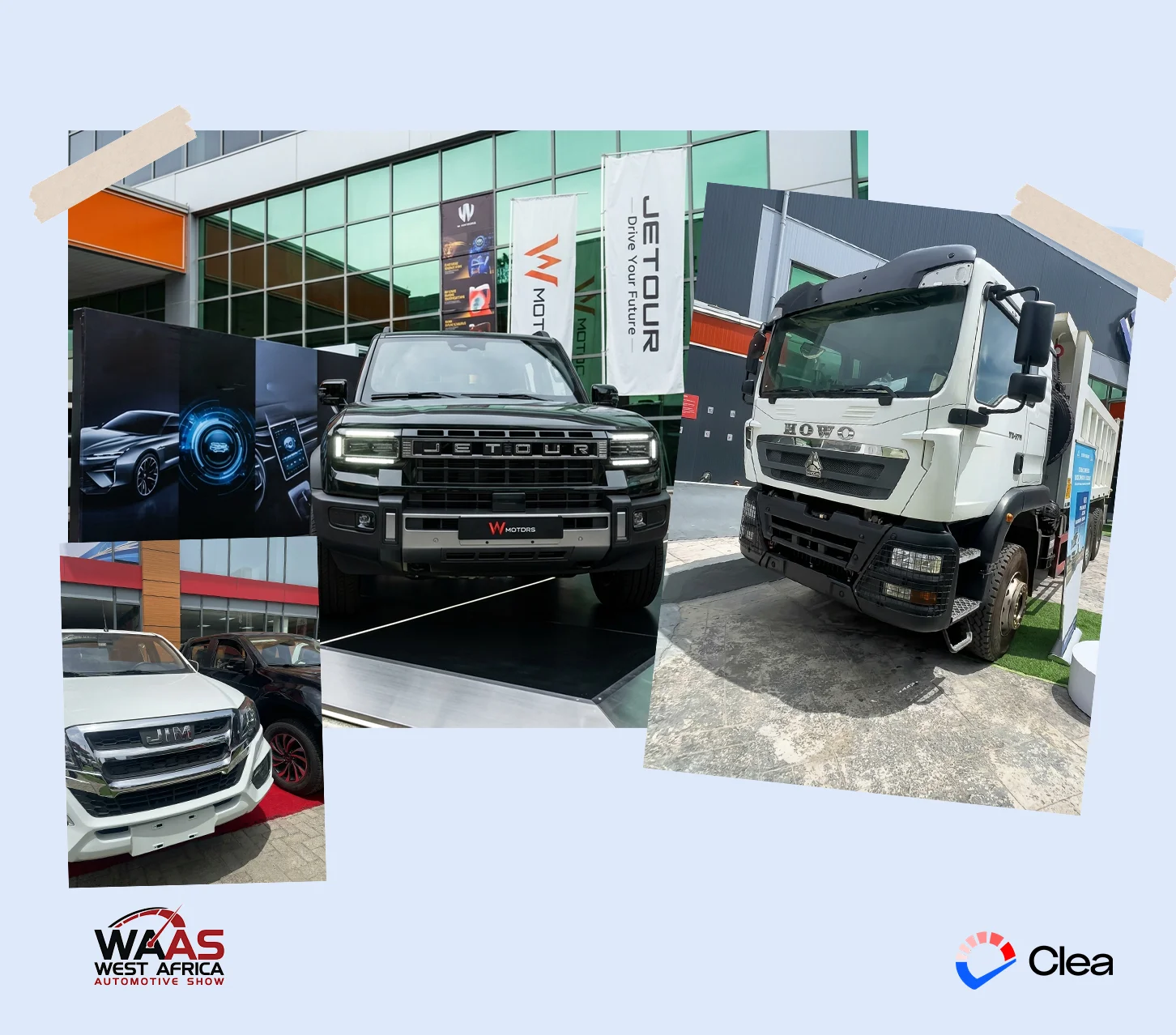
The first thing you notice walking into the Landmark Centre during the West Africa Automotive Show isn’t the Jetour cars or the massive trucks lined up for display.
It’s how much of West Africa is squeezed into a single venue. A Pakistani auto-component manufacturer is in the middle of a deal with a wholesaler from Onitsha. A Beninese reseller is asking a Chinese supplier whether the new shipment of shock absorbers can be sent through Cotonou. Two Ghanaian distributors are comparing notes on Lagos clearing agents. Somewhere near the entrance, a lubricant brand is sponsoring free coffee, and the queue for it is already six rows of importers deep.
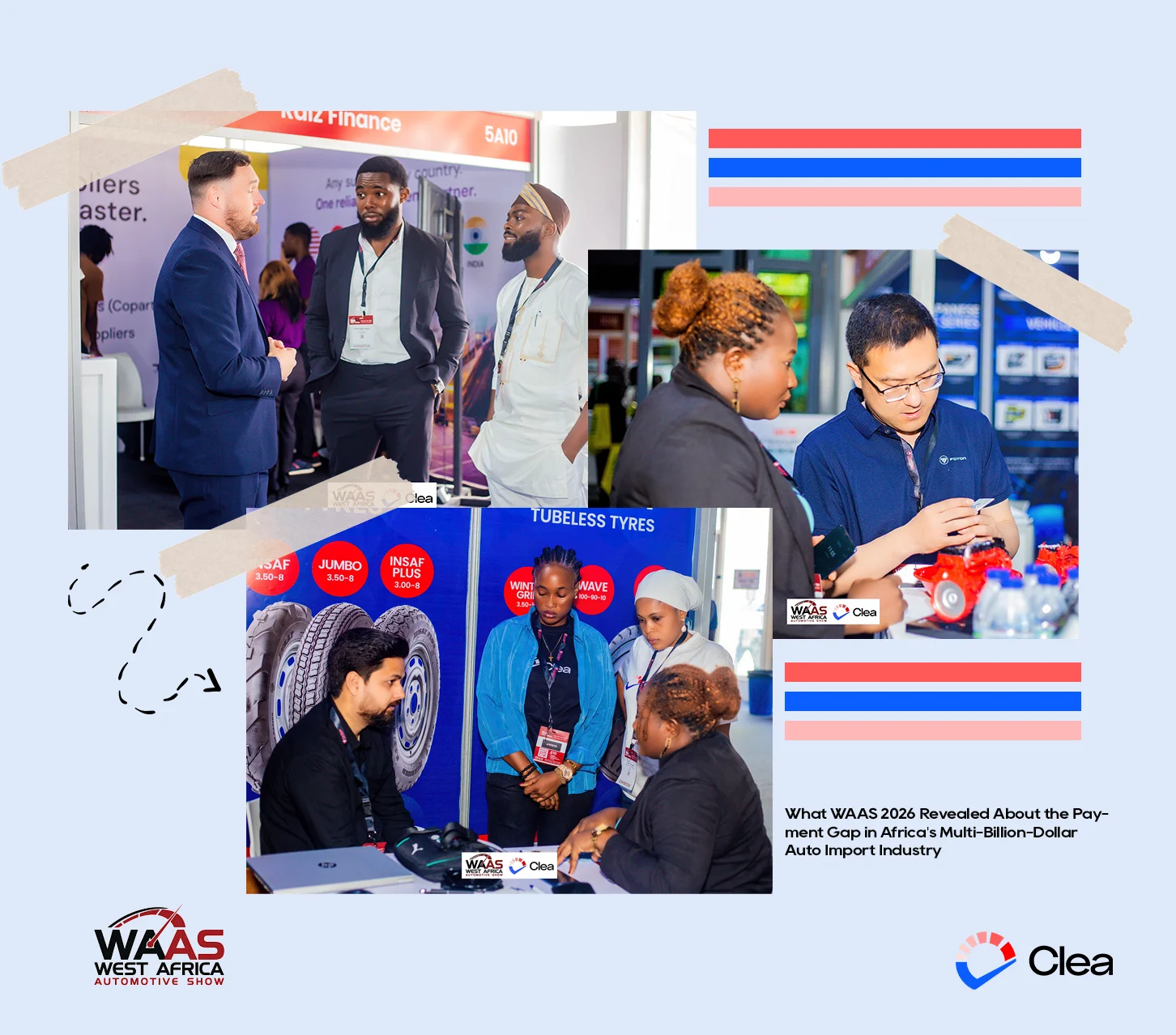
WAAS, the West Africa Automotive Show, is the largest automotive aftermarket trade exhibition in this part of the continent. It runs annually at the Landmark Centre on Victoria Island, Lagos, and the 2026 edition pulled in more than 350 exhibitors and over 6,000 industry professionals from across sub-Saharan Africa. The product range on display was as wide as the trade itself. Tyres, engine oils, lubricants, diagnostic equipment, batteries, transmissions, brake pads. If it keeps a vehicle moving on a West African road, somebody at WAAS was selling it.
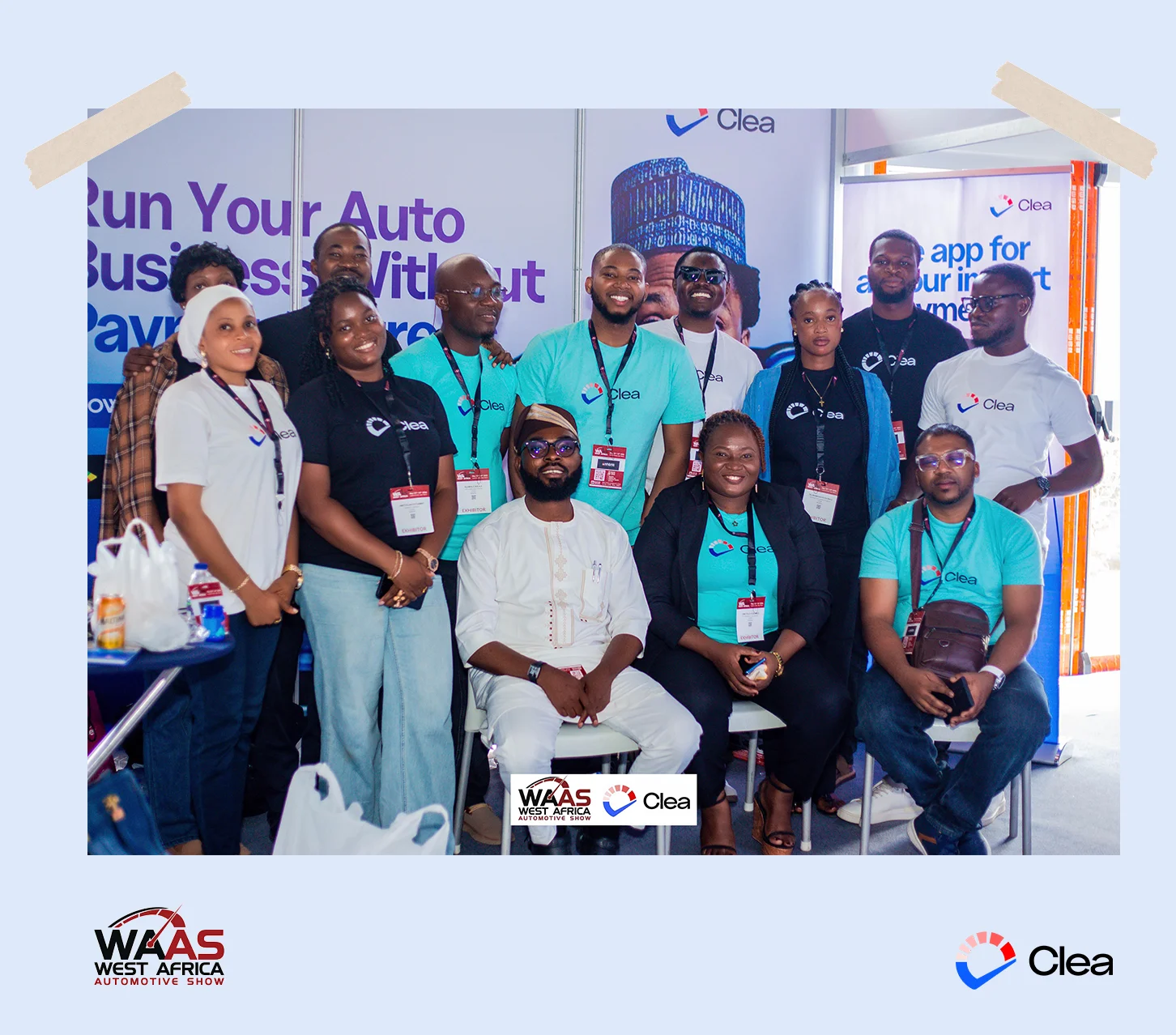
Clea came as the cross-border payments platform built for African importers, with one job. To listen properly to the businesses moving in this industry and find out where the payment layer is costing them the most.
The Scale of the Industry Behind the Show
Industry estimates put Nigeria’s annual automotive import bill between $3.3 billion and $4.2 billion, with spare parts taking up a large share of that figure. It’s one of the largest auto parts import markets on the continent. The trade routes are diverse. Bulk volumes from China. Specialized components from Pakistan. Vehicles and machinery from Europe, the Middle East, and the United States. Significant intra-African movement between Ghana, Côte d’Ivoire, Benin, Togo, Cameroon, and Nigeria. The buyers are the people who keep the region’s roads moving, including wholesalers operating out of markets like Ladipo and ASPMDA, fleet operators, mechanics who have grown into distributors, and a fast-rising class of younger importers running digitally-native parts businesses.
What rarely gets discussed in the headlines is the part of the trade that happens before a single container is loaded – the payment.
A Nigerian importer paying a supplier abroad rarely sends naira to the supplier’s local currency in one step. The naira converts to dollars first, then to the supplier’s currency on the other side. Each conversion carries a spread of 1-3%. On a 50 million naira order, that can mean 1-3 million naira lost to FX before the goods even leave the country of origin. Add correspondent bank delays, dollar liquidity swings, and documentation every importer above $1,000 already knows by heart, and a single payment can cost two weeks and a meaningful share of margin.
That gap is exactly why Clea exists, and exactly why WAAS was the right place for us to be.
Day One – Setting the Tone on the Stand and on the Conference Stage
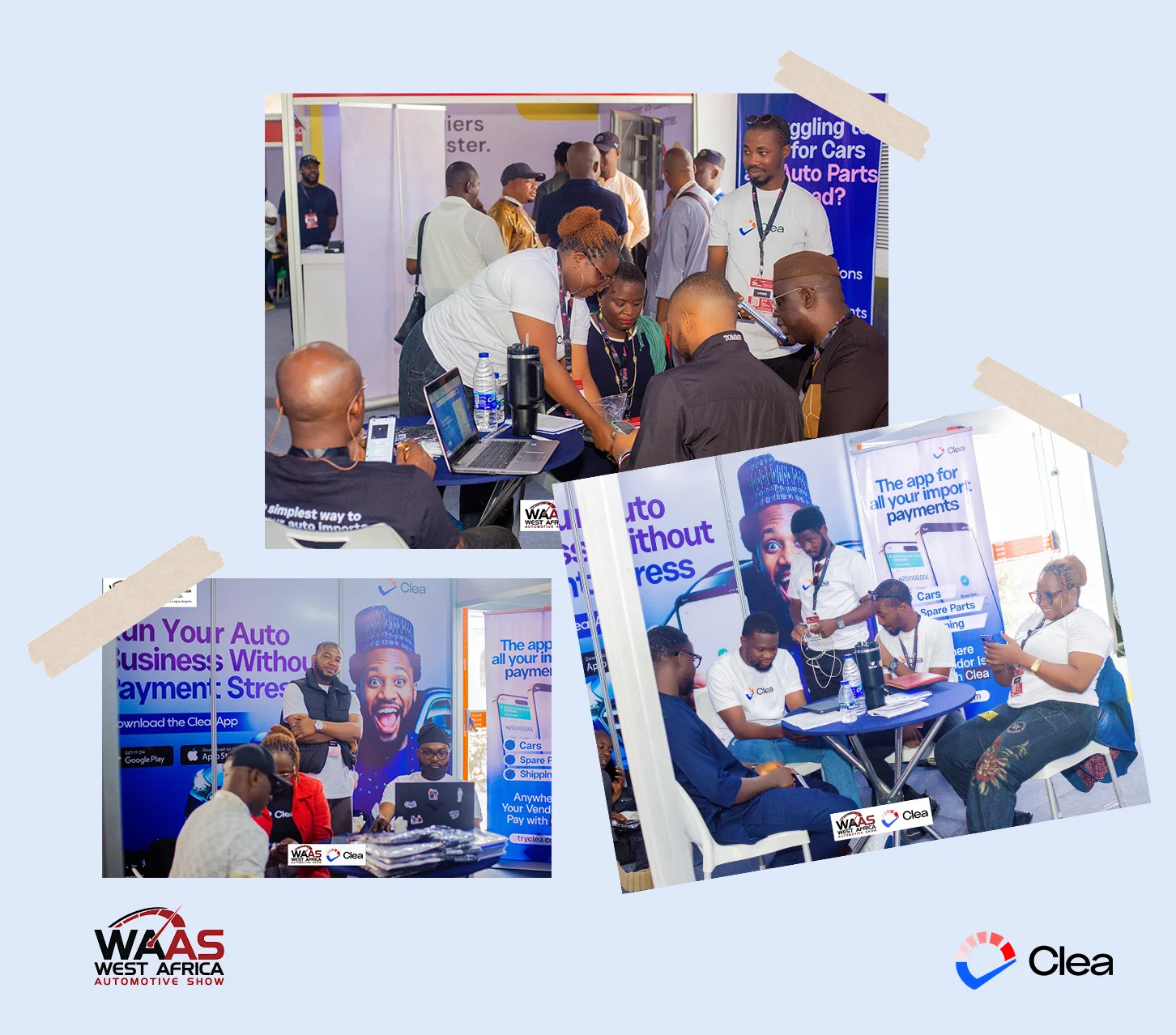
Tuesday belonged to the early arrivals. By mid-morning, the conversations at the Clea stand had already begun to settle into a recognizable shape.
What we heard repeatedly was not a request for more features. It was a request for certainty. Wholesalers wanted to know how quickly a supplier abroad could confirm receipt of funds. Distributors wanted to understand how reliably a payment would land during periods of FX tightness. Importers planning their next quarter wanted to see, in writing, what a typical settlement window looked like across the corridors they trade in most. China, Pakistan, and the UAE.
A pattern surfaced on day one and held throughout the week. The buyers most ready to switch payment partners were the ones who had already lost a supplier relationship due to a late payment. After a loss like that, every payment afterwards carries a different kind of weight.
Omotola Dorcas Oladimeji on the Keynote Stage
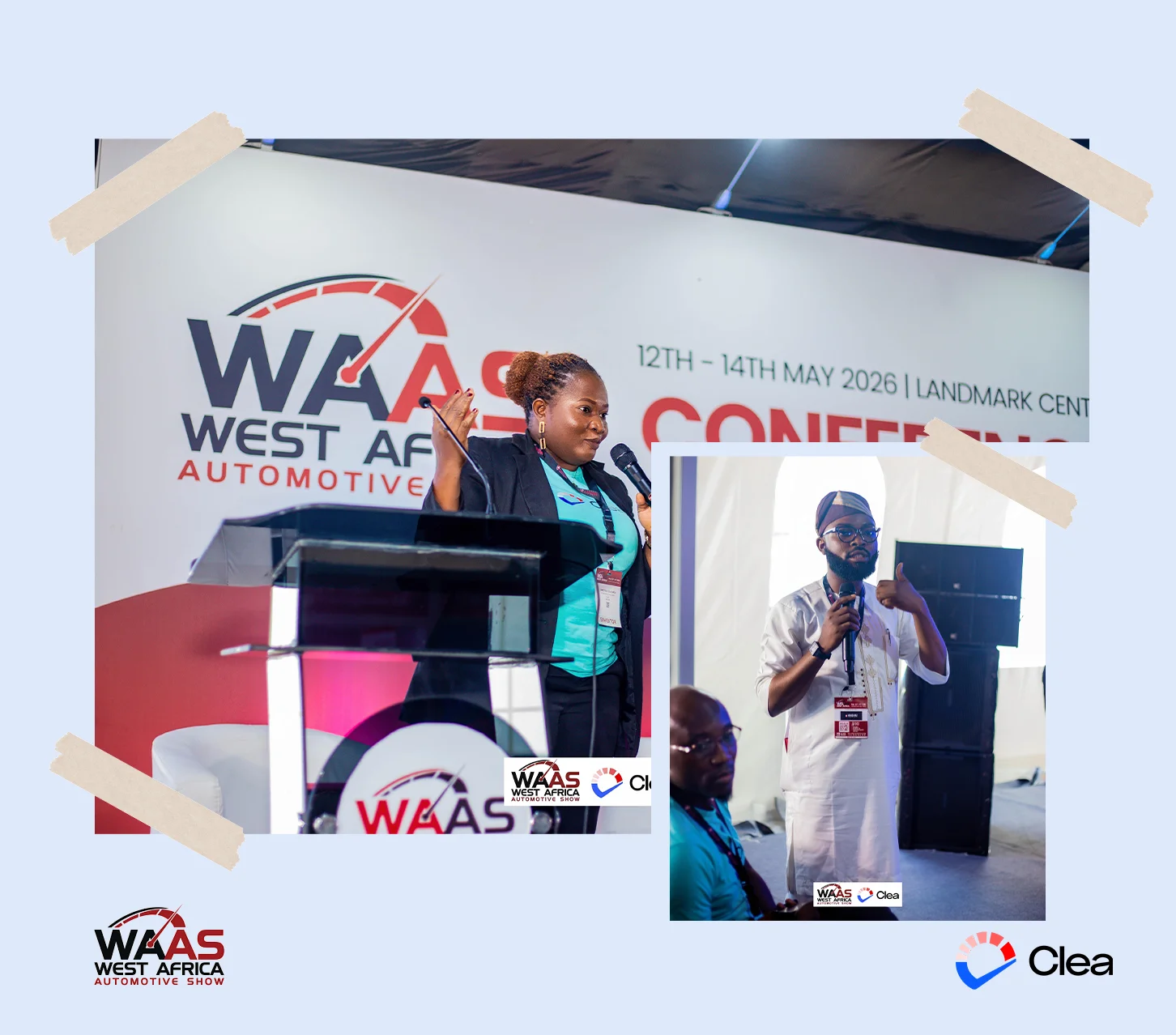
Omotola Dorcas Oladimeji, VP of Partnerships & Growth at Clea, took the WAAS conference stage to deliver her keynote, “Breaking the Payment Barrier, Enabling Seamless Global Trade for African Auto Importers.”
Midway through, Omotola turned to the part of the conversation the industry talks about least – trust infrastructure. The relationship between an African importer and an overseas supplier is, at its core, a credit relationship built on payment reliability. When payments are slow, unpredictable, or routed through opaque channels, trust erodes. Once it erodes, suppliers begin demanding full deposits upfront, holding back inventory, or pricing risk into their invoices. Trust, in that sense, isn’t a soft variable. It compounds on both sides of every trade.
The clearest measure of how the keynote landed was the line at our stand for the rest of the day.
Day Two – The Patterns Behind the Conversations
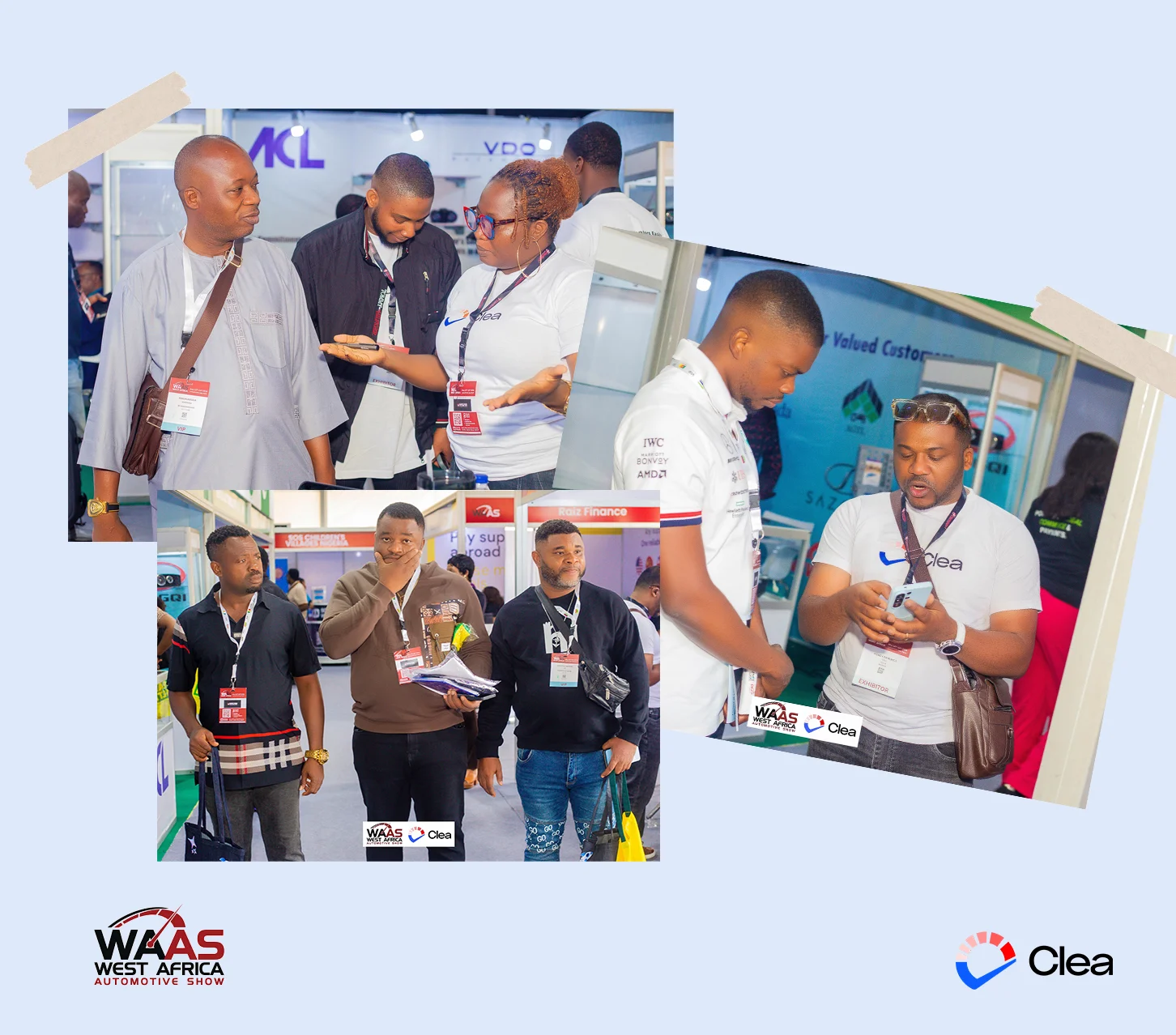
Three patterns became impossible to ignore.
The market is no longer shopping for a platform: When Clea was first being built, we expected importers to compare us feature-by-feature against alternatives. The conversations on day two were different. Buyers open with two requests: speed and reliability. They’ve all tried something before. They’re not impressed by another login screen or a slicker dashboard. What they want is to stop thinking about the payment the moment it leaves their hands.
Suppliers want proof before production: The weight of delayed payments across the industry has hardened the terms importers are offered. That changes what an importer needs from a payment partner. Not just speed, but real-time, verifiable confirmation that can be shared with a supplier on the same call.
Nigerian Importers are digitally inclined: A growing share run their businesses end-to-end on mobile, between WhatsApp and a working spreadsheet. They’re the cohort that will shape this trade over the next decade, and they have no patience for payment flows that feel like banking from ten years ago.
The payment friction we’ve been building Clea to solve isn’t auto-specific, but it tends to be at its most acute in the auto industry because deal sizes are large, margins are thin, and supplier relationships are unforgiving.
Day Three – Adjacent Sectors, and the Importers Yet to Start
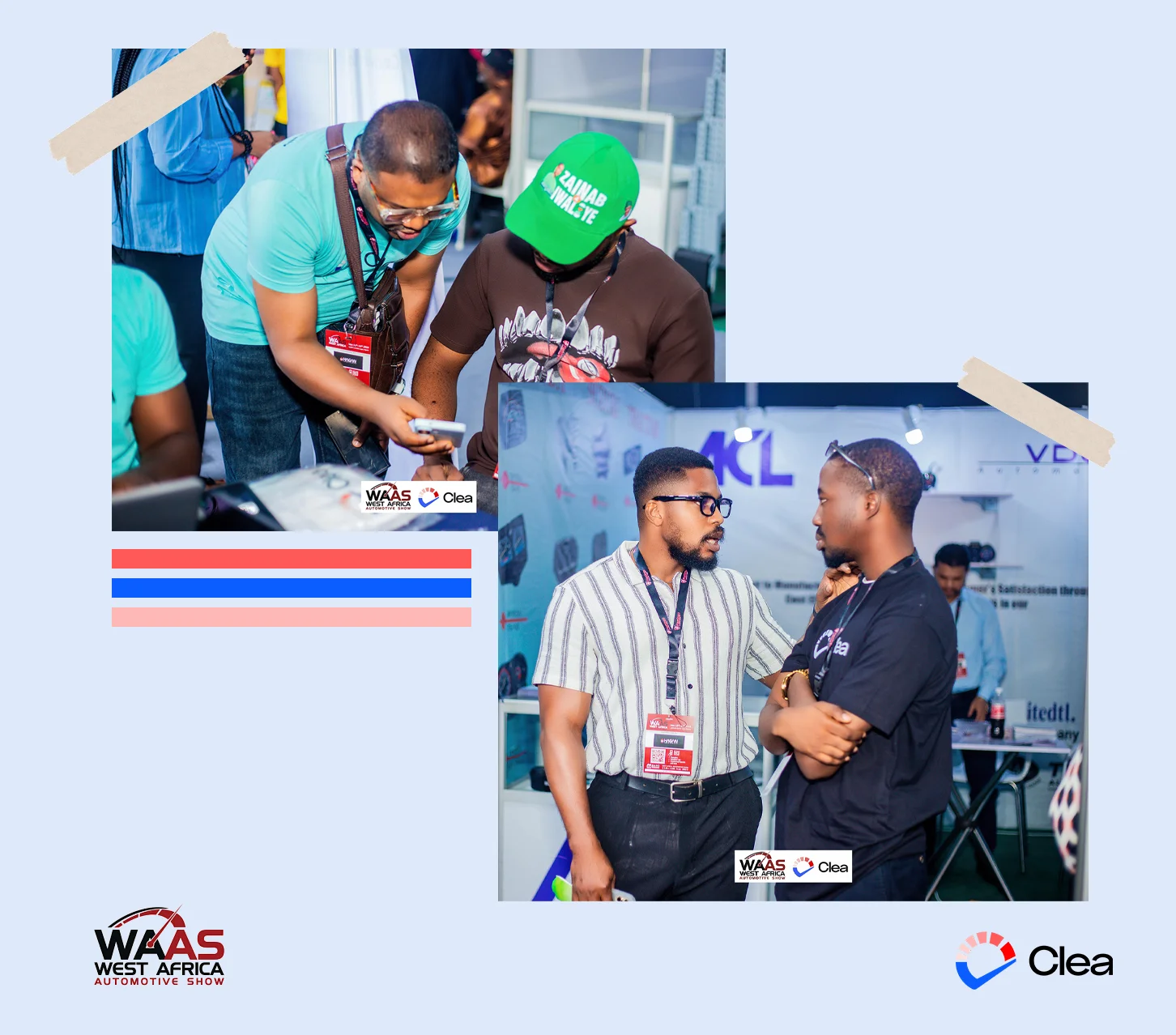
A significant share of the morning was spent with trade associations and structural partners who shape the West African aftermarket, including representatives connected to ASPMDA, the Automobile Spare Parts & Machinery Dealers Association. ASPMDA is the largest automobile and agricultural machinery spare parts open market in sub-Saharan Africa and one of WAAS’s founding partners. Its reach into the day-to-day mechanics of how parts move through this region is unmatched, and any serious conversation about importer infrastructure has to start there.
We also met with a cohort that doesn’t always show up in industry coverage but is central to the future of this sector. Importers who haven’t started yet. People in the planning phase, with capital lined up and supplier relationships warming, but no clear answer to the payments question. The decisions this group makes in their first six months of operation tend to lock in their habits for years. If their first cross-border payment is a dollar-routed, nine-day ordeal, they internalize that as the cost of doing business. If their first payment lands cleanly in 24 hours or less, their expectations for the rest of their importing career are permanently reset.
By the time the doors closed on Thursday afternoon, we had what we came for. Not just a list of leads, but a sharper sense of which parts of the market we already serve better than anyone else, and where we should be building next.
The Upside Down House – Because All Work and No Play Is Still Bad Advice
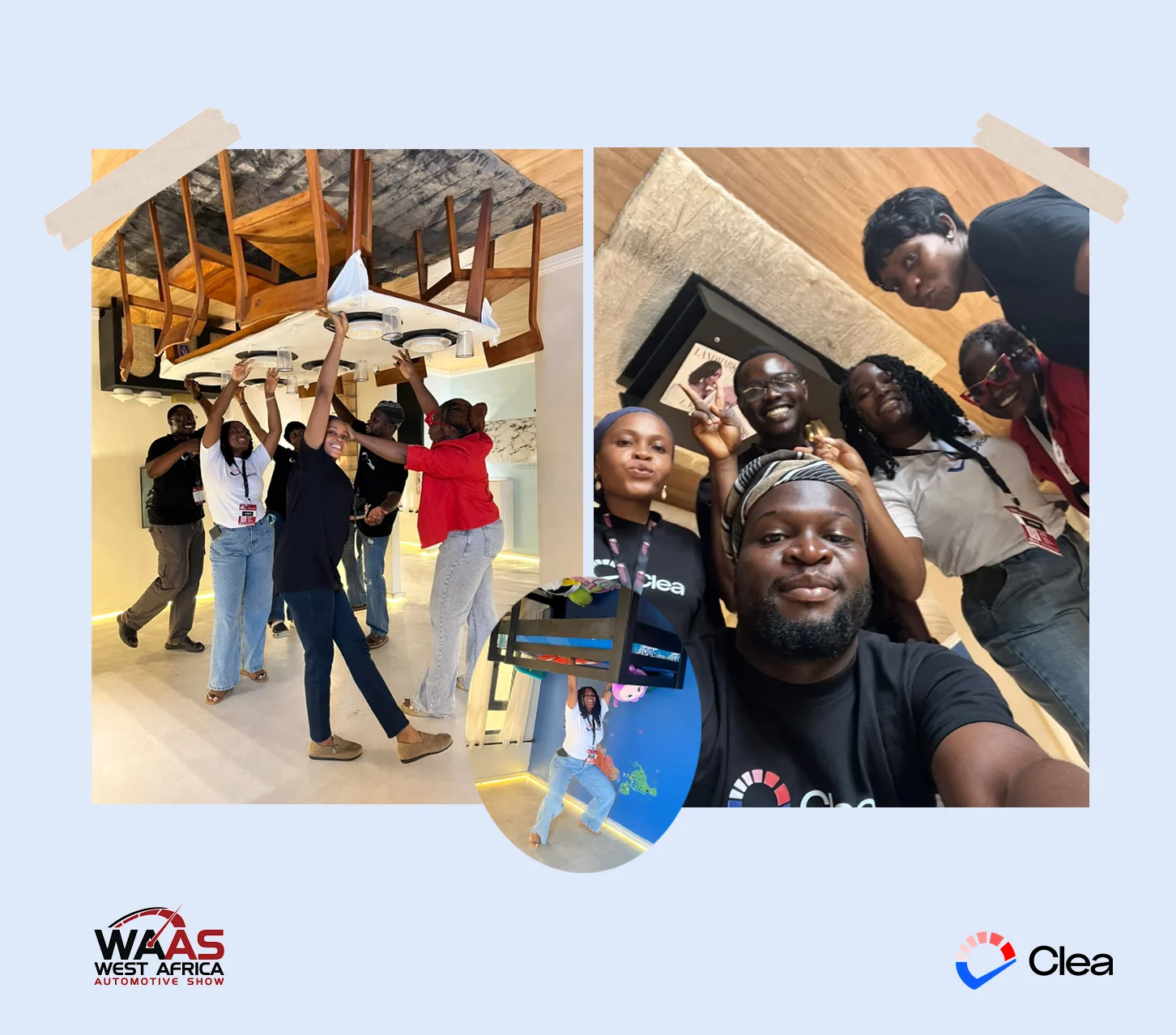
After the doors of WAAS closed, the Clea team made a unanimous decision. We were walking over to the Upside Down House at Landmark.
If you haven’t been, the experience is exactly what the name promises. A house upside down. The dining table is bolted to the ceiling. The sofa hangs above your head. The tour guide, Stephen, positions you in the corner of a room until, in the resulting photo, you appear to be standing comfortably on a kitchen counter that is actually the floorboards of an inverted bedroom.
A few things worth knowing about the Clea team in the Upside Down House.
Omotola, who’d commanded a conference room of importers earlier in the week, spent five full minutes trying to get a single photo where she looked like she was sitting on a fridge. Two of our engineers debated, with surprising seriousness, the structural logic of the inverted restroom. Two team members got the giggles in the upside-down living room and refused to leave until the rest of us promised to take the photographs without them.
We finished the evening with ice cream, the team agreed had been earned several times over.
There’s a working theory inside the company that the best ideas don’t arrive during work. They arrive about 20 minutes after you stop. WAAS 2026 was 3 days of paying attention. The Upside Down House was 20 minutes of standing on a ceiling. The two belong in the same week for a reason.
What WAAS 2026 Confirmed for Clea
The African auto importer isn’t waiting for a more sophisticated app. They’re waiting for someone to make the most stressful part of their business – moving money across borders – feel like the least stressful part of their week. That’s a harder problem than it looks from the outside. It’s the one we built Clea to solve.
WAAS 2026 confirmed what we suspected and showed us a few things we hadn’t. The market is younger than the press suggests, and it stretches across more borders than most reporting captures. What ties almost every importer’s story together is the same friction with overseas suppliers in China, Pakistan, the UAE, Europe, and across West Africa itself. That friction sits inside the payment layer. And it’s what separates the businesses that grow from the ones that stay where they are.
To everyone who stopped by the Clea stand, asked the difficult questions, and trusted us with the real numbers of their operations, thank you.
See you at WAAS 2027, with a measurably different industry to talk about.