

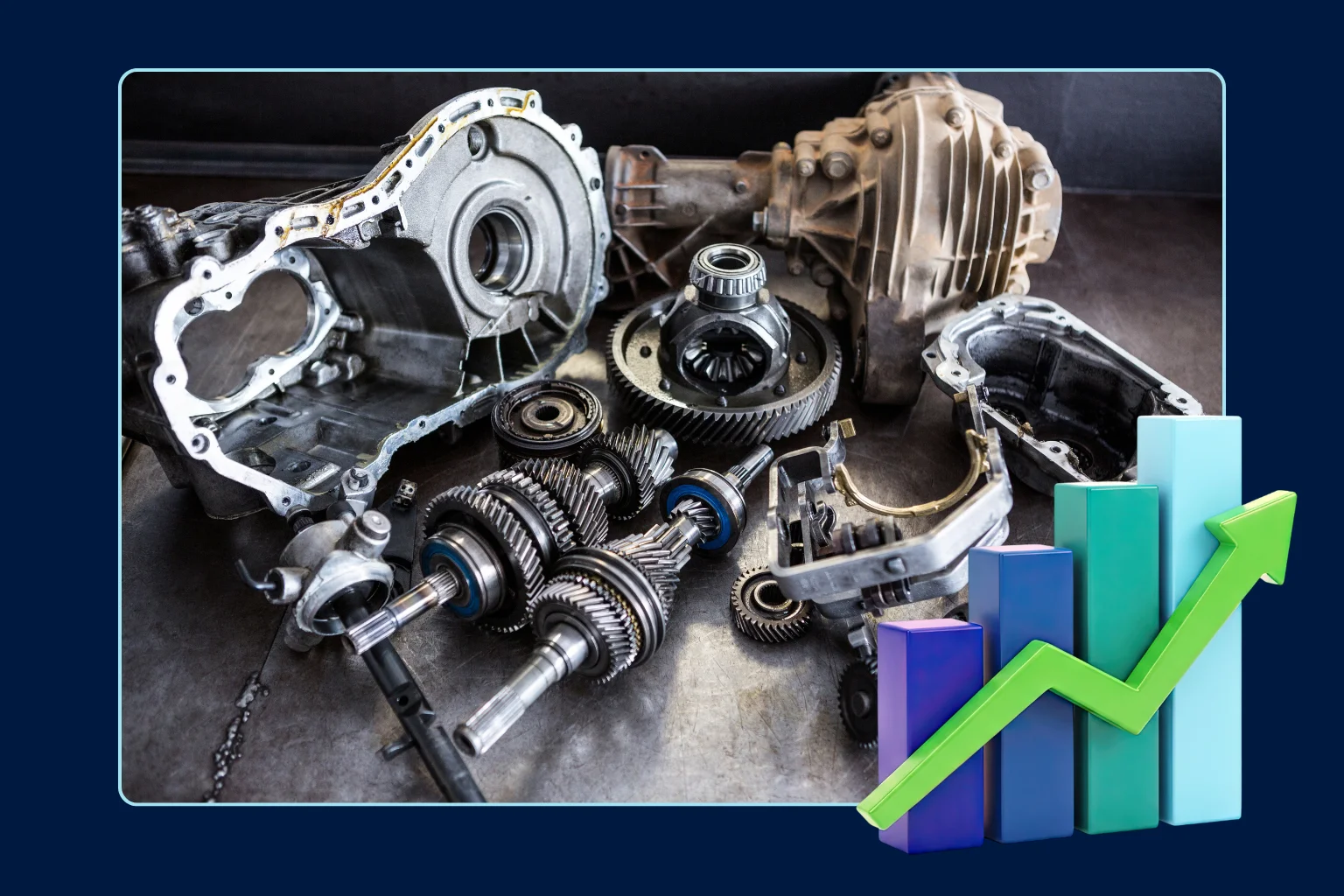
Nigeria’s automotive industry is different from many developed markets. While new car sales remain relatively low compared to Tokunbo sales, the country’s aftermarket for automotive spare parts continues to expand rapidly. Across cities and transport corridors, vehicles stay on the road longer, mechanics remain busy, and spare parts dealers see steady demand for everything from brake pads to engine components.
One of the main reasons is the age of Nigeria’s vehicle fleet. A large percentage of cars in the country are used imports that have already spent years on the road before arriving. Once they begin operating locally, they face challenging road conditions, heavy daily usage, and limited access to formal servicing networks.
Economic realities also play a role. For many Nigerians, buying a brand-new car is simply out of reach. Instead, vehicle owners maintain and repair existing cars, keeping them operational for as long as possible.
At the same time, Nigeria’s growing population, expanding logistics sector, and heavy reliance on road transportation mean millions of vehicles are used intensively every day.
Together, these factors have created one of the largest automotive spare parts markets in Africa. Understanding what drives this demand reveals not only the realities of Nigeria’s automotive landscape but also the opportunities emerging within its rapidly growing auto aftermarket industry.
Nigeria’s Aging Vehicle Fleet: The Core Driver of Spare Parts Demand
At the heart of the spare parts story in Nigeria is the simple reality that most cars on the road are old.
Industry estimates suggest that the average vehicle on Nigerian roads is roughly 14 years old. Over 60% of cars have been in use for more than 12 years, and only about 11% are under five years old. With more than 11 million registered vehicles across the country, that’s a massive fleet of aging automobiles that need constant attention.
Most of these vehicles arrived as used imports, which Nigerians commonly call tokunbo. The United States is the largest supplier of these used passenger cars, while Japanese brands like Toyota, Honda, Nissan, and Lexus make up nearly 70% of the vehicles on Nigerian roads. These cars may have been running for 8 to 10 years before they even get to Nigeria.
Once they begin operating locally, maintenance becomes unavoidable. Engines require new filters, belts, and gaskets. Electrical systems need repairs. Transmission systems require servicing. And because buying a brand-new car is financially out of reach for the majority of Nigerians, the default choice is to keep repairing what’s already there.
This continuous maintenance cycle is the primary reason spare parts demand remains consistently high. And as the vehicle population continues to grow, so does the pool of cars that will eventually need new parts.
Road Conditions and Heavy Vehicle Usage
If an aging vehicle fleet creates demand for spare parts, Nigeria’s road conditions accelerate it.
Anyone who has driven in Lagos, Ogun, or along interstate highways knows the reality: potholes, unpaved stretches, poorly maintained surfaces, and speed bumps that feel more like obstacles than traffic calming measures. These conditions put enormous stress on vehicles, even relatively new ones.
Tyres get shredded. Shock absorbers take a beating. Suspension systems wear out faster than they would under normal driving conditions. And the dust and debris that come with unpaved or deteriorating roads clog air filters far more quickly than in countries with better infrastructure.
Overheating is also one of the most common vehicle problems in the country, which means radiators, water pumps, and coolant hoses are always in demand.
The road conditions and driving patterns covered above don’t wear out every part equally. Certain components take the worst of it, and those are the ones that keep market traders restocking week after week.
How Much Nigeria Spends on Imported Auto Spare Parts
The numbers behind Nigeria’s spare parts imports are hard to ignore.
In late 2024, the Director-General of the National Automotive Design and Development Council (NADDC) confirmed that the country spends over $1 billion every year just on imported vehicle spare parts – components like bumpers, tyres, batteries, oil filters, and headlights. That figure covers parts alone, not whole vehicles.
When you zoom out to include fully-built vehicles and all associated automotive components, the picture gets much bigger. Industry officials have estimated Nigeria’s total automotive import bill at anywhere between $3.3 billion and $4.2 billion annually, with spare parts making up a large share. By some accounts, Nigeria alone absorbs close to 79% of all automotive components imported into West Africa.
The root cause is straightforward, as local manufacturing hasn’t kept pace with demand. An estimated 70 – 80% of all spare parts used in the country are imported, sourced mainly from China, the United States, Turkey, and South Korea. Domestic production has struggled to gain footing due to limited raw materials processing, inconsistent policies, and high costs. Even motorcycle spare parts contribute as the NADDC puts an import figure at roughly $19 million per year, and that doesn’t include tricycles or cars.
In total, Nigeria’s spare parts market was valued at approximately $1.4 billion in 2024, with growth projected at around 5% annually. Across the continent, Africa’s automotive aftermarket was worth over $23 billion and is expected to approach $38 billion by 2032, with Nigeria among the largest contributors.
The demand is clearly there. But getting parts into the country efficiently is a challenge in itself.
Importing Auto Spare Parts Into Nigeria: What You Should Know
For anyone thinking about the spare parts import business, Nigeria offers enormous potential. The demand is constant, the margins can be healthy, and the market keeps expanding. But the process isn’t without its hurdles.
Most spare parts enter Nigeria through the Lagos ports, primarily Apapa and Tin Can Island. Parts typically arrive in containers, often bundled alongside other goods. The process involves customs clearance, payment of duties, and navigating logistics that can sometimes be unpredictable. Import duties on auto parts generally range from 10% to 35%, depending on the component type.
China is currently the largest supplier of new vehicle parts to Nigeria, while the United States leads in used parts and salvage components. Turkey has also emerged as a growing supplier, offering a balance of quality and affordability that resonates with Nigerian buyers.
One of the biggest challenges for importers is the foreign exchange situation. The naira’s depreciation has pushed up the cost of importing, squeezing margins and raising prices for end consumers. Despite this, demand has held steady because vehicle repairs remain non-negotiable for most car owners.
The good news is that the process of paying for and shipping spare parts internationally has become significantly easier. Modern payment platforms and logistics services now allow Nigerian buyers to source parts directly from overseas suppliers, handle cross-border payments, and arrange shipping with far less friction than before. A good example is Clea helping importers simplify international payments and removing some of the barriers that once made the process unnecessarily stressful.
As the infrastructure around importing continues to improve, more businesses, from experienced traders to first-time entrepreneurs, are finding it viable to enter the spare parts import space. And that brings us to the broader opportunity this market represents.

Opportunities in Nigeria’s Automotive Aftermarket
Given everything we’ve covered, it’s clear that Nigeria’s automotive aftermarket isn’t just a market. It’s an ecosystem with real, long-term growth potential.
Several specific opportunities stand out for anyone looking to participate:
- Spare parts importing and distribution remain the most obvious entry point. With 70-80% of parts still imported, there’s steady demand for reliable suppliers who can offer quality parts at competitive prices.
- Online spare parts marketplaces are also emerging as a growing segment of the industry. Digital platforms allow mechanics and car owners to compare prices, locate specific components, and arrange deliveries more easily.
- Specialized servicing and workshops also present opportunities. As the vehicle fleet grows and diversifies, there’s an increasing need for mechanics and service centres that specialize in specific brands or systems.
Governments’ Input in the Auto Spare Parts Space
The Nigerian government has taken steps to address the country’s heavy dependence on imported parts.
The NADDC has invested in practical training programs, including initiatives to teach engineers modern automotive design software aimed at building the technical foundation needed for local parts production.
Many licensed assembly plants still operate well below capacity, and the shift from importing to local production hasn’t yet reached the scale needed to meaningfully reduce the import bill. Until that changes, the spare parts market will remain import-dependent, and the opportunities within it will continue to grow alongside the demand.