
Copart is one of the first places to look for affordable vehicles from the US. Before you can bid and buy, you need to understand how the site organizes its listings. Every car is grouped under a category that signals its condition, its title, and the way it’s sold.
This guide covers the Copart auction categories you’ll meet while searching for a car. We’ll walk through the vehicle types, the damage and title labels, and the sale formats, then point out which categories give African buyers the best value. You’ll also see how to pay Copart without missing the payment deadline.
What Copart Auction Categories Are
A copart category is a searchable tag attached to a lot. It tells you what kind of vehicle you’re looking at, what condition it’s in, and how it’s being sold. You can filter the whole inventory by these tags, which is how buyers cut a daily flood of lots down to the handful worth a closer look.
If you’re importing into Africa, treat the title and condition as your risk signals. For example, a clean-title Toyota Camry and a salvage Camry can be the same year and still carry very different prices. That gap turns into repair cost once the car gets home, which is why reading a Copart auction category right protects your budget.
Copart Categories by Vehicle Type
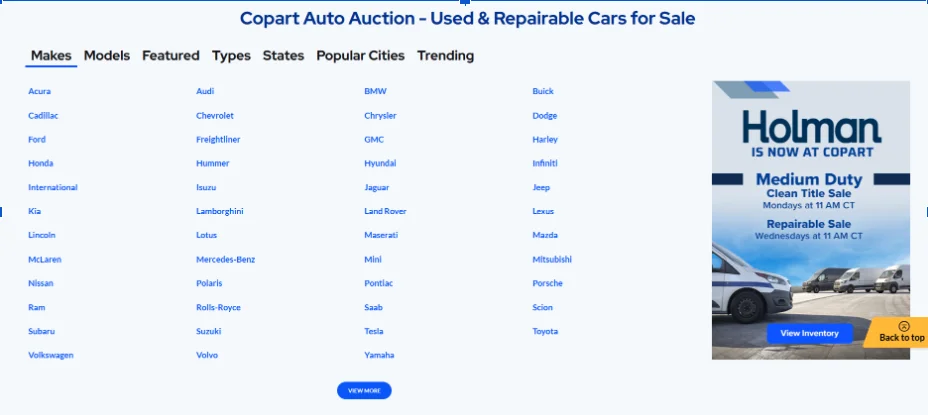
Copart organises its inventory by vehicle type. This simply refers to the physical category of the asset being sold, and it helps buyers quickly focus on the segment they’re interested in without filtering through unrelated listings.
The most common types include passenger cars and SUVs, commercial trucks, vans, motorcycles, and heavy equipment. Each category behaves differently in terms of pricing, demand, and repair economics. For example, passenger vehicles tend to move faster and attract broader competition, while trucks and heavy equipment often appeal to niche buyers with specific operational or business needs.
There are also specialty categories such as recreational vehicles, marine units, and fleet vehicles, which often require more targeted knowledge to evaluate properly. For importers and dealers, filtering by vehicle type is usually the first step before assessing condition, because it immediately narrows the market to the segment they actually operate in.
Copart Categories by Title Type
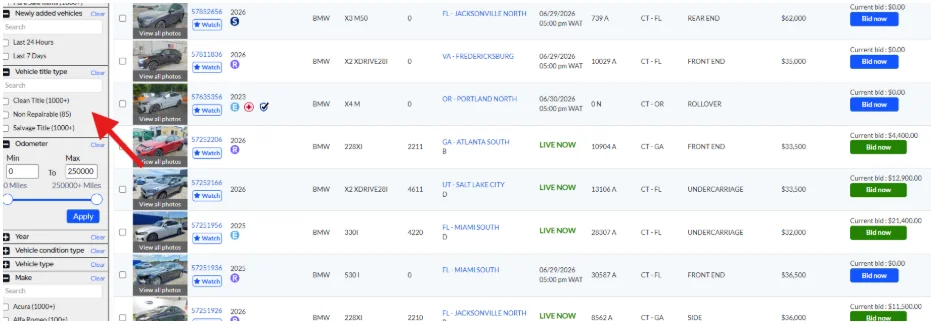
Title type is one of the most important classifications on Copart because it affects a vehicle’s value, insurability, resale potential, and eligibility for registration.
Clean Title
A clean title indicates that the vehicle has not been declared a total loss by an insurance company. These vehicles typically command higher prices because they involve fewer administrative hurdles and are generally easier to finance, insure, register, and resell. For buyers focused on minimizing risk, clean-title vehicles are often the most straightforward option.
Salvage Title
A salvage title means the vehicle was declared a total loss by an insurer after damage, theft recovery, or another qualifying event. While salvage vehicles are usually available at significant discounts, the lower purchase price comes with additional risk. The true value of a salvage vehicle depends on the severity of the damage, the availability of replacement parts, and the cost of returning it to a roadworthy condition.
Nonrepairable or Parts-Only Title
Vehicles classified as non-repairable or parts-only have sustained damage severe enough that they cannot legally return to public roads in their original market. These lots are intended for dismantling, parts recovery, or scrap value rather than repair and resale. Buyers should treat them as inventory for components rather than rebuild projects.
Copart Categories by Damage and Condition
While title status tells you how a vehicle is legally classified, damage and condition categories explain what has happened to the vehicle itself. With several damage types, these classifications provide insight into the scope of repairs required and often have a direct impact on profitability.
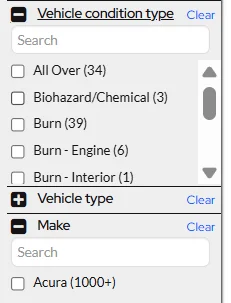
Run and Drive
The Run and Drive designation means the vehicle was able to start, move forward under its own power, shift into gear, and come to a stop during Copart’s initial inspection. Although it is not a guarantee of mechanical health, it generally suggests that the engine, transmission, and basic drivetrain systems were operational at the time of intake.
Front End Damage
Front-end damage is among the most common conditions found on Copart. In many cases, the damage is limited to external components such as bumpers, headlights, fenders, and hoods, making repairs relatively straightforward. However, you should carefully review photos and inspection details to determine whether the impact extended into structural components or critical mechanical systems.
Hail Damage
Hail-damaged vehicles typically suffer cosmetic damage rather than major mechanical issues. Dents and panel damage can significantly reduce auction prices even when the vehicle remains fully functional. If you have access to affordable bodywork or paintless dent repair services, hail-damaged vehicles can represent attractive value opportunities.
Flood and Water Damage
Flood-damaged vehicles require the highest level of caution. Water intrusion can affect electrical systems, sensors, wiring harnesses, control modules, and interior components, creating problems that may not become apparent until months after purchase. While some flood vehicles can be repaired successfully, the uncertainty surrounding long-term reliability makes them one of the riskier categories on Copart.
Rear-End Damage
Rear-end damage is often less concerning mechanically than front-end collisions because critical powertrain components are usually located at the front of the vehicle. However, significant rear impacts can affect the trunk floor, suspension components, frame structure, or safety systems, making a thorough inspection essential.
Side Damage
Side-impact damage can range from minor cosmetic repairs to major structural work. Damage involving doors and quarter panels may be relatively manageable, but impacts that affect pillars, rocker panels, or the vehicle’s frame can substantially increase repair costs and complexity.
Copart UK Write-Off Categories
If you’re browsing vehicles on Copart UK, you’ll come across write-off categories that differ from the title system used in the United States.
- Category N (Cat N): The vehicle has suffered non-structural damage and can be repaired and returned to the road.
- Category S (Cat S): The vehicle has sustained structural damage but can still be repaired and re-registered.
- Category B (Cat B): The vehicle cannot return to the road, although some parts may be salvaged for reuse.
- Category A (Cat A): The vehicle must be scrapped entirely, and no parts can be reused.
Cat N and Cat S are the most commonly encountered categories. While both can offer lower purchase prices, Cat S vehicles typically require more extensive repairs and careful inspection due to their structural damage history.
Which Copart Categories Are Best to Explore?
The best Copart category depends on what you’re trying to achieve. If your priority is minimizing risk, clean-title vehicles and lightly damaged run-and-drive cars are usually the safest place to start. They often cost more upfront, but the repair process is generally more predictable.
If you’re focused on value, salvage vehicles with repairable front-end or rear-end damage tend to attract the most interest. These vehicles can offer substantial discounts compared to clean-title equivalents while remaining economically viable to repair and resell.
On the other hand, categories such as flood-damaged, nonrepairable, and parts-only vehicles require a higher tolerance for risk and a clear understanding of the costs involved. While they may appear inexpensive at auction, unexpected repairs, sourcing challenges, or registration restrictions can quickly erode any savings.
Rather than looking for the cheapest category, look for vehicles that offer the best balance between purchase price, repair costs, and resale potential.
Pay for Your Copart Vehicle With Clea
Clea can help simplify the payment process after you’ve won a vehicle on Copart. Clea is not a bank. It’s a cross-border payments platform that enables users to fund a wallet, make international payments, and pay merchants directly. For Copart buyers, this means you can move from winning an auction to completing payment without having to coordinate multiple payment services.
Some key features of Clea include:
- Direct Copart payments: Pay Copart directly from your Clea account after funding your wallet.
- Naira to USD conversion: Fund in naira and pay overseas in USD from one account.
- Local currency funding: Add funds using supported local payment methods before making overseas payments.
- Payments in your name: Send to auctions and suppliers in your own name, so the payment matches your account and clears without rejection.
- Built for cross-border payments: Handle international transfers and vehicle purchase payments through a single platform.