

In import trade, wire transfer is the established way to send money to a US supplier. Wires clear over Fedwire, the Federal Reserve’s real-time settlement system, delivering the full payment to the recipients’ bank the same business day. For a seller deciding when to release goods, that mix of speed and certainty is why wire transfers became the default.
That reliability comes at a cost. A wire transfer carries charges and constraints that are easy to absorb on a single large payment but harder to ignore across the volume an active importer handles each month. As that volume has grown, individuals have sought a reliable alternative to wire transfer in Nigeria.
The Drawbacks of Using Wire Transfers for International Payments
High transfer fees
Fedwire is priced as a flat fee on each transfer rather than as a percentage, and that fee applies regardless of the payment amount. Two charges typically apply, one levied on the rail and the other applied by the institution or platform sending the funds. For a single large payment, the cost is marginal against the moving value. For a business paying suppliers frequently, the per-transfer fee compounds and results in lower net returns on each transaction.
Irreversibility
Wire transfers are designed for final settlement. Once the recipient’s bank has accepted the funds, the transaction is typically considered complete and cannot be reversed.
This level of finality means that errors in account details, or unauthorized changes to supplier banking information, can result in funds being sent to the wrong recipient with limited or no possibility of recovery. As a result, wire transfers are a common target for business email compromise and invoice fraud schemes. The responsibility for verifying beneficiary details, therefore, rests entirely with the sender before initiating payment, making due diligence a critical part of the process.
Limited Access to Faster Payment Rails
Wire transfers remain the default method for paying U.S. suppliers because they are the most widely supported option through existing banking channels.
As a result, businesses are effectively limited to a single cross-border payment route, even in cases where alternative rails could offer faster settlement or lower transaction costs. Accessing those faster rails typically requires a U.S. bank account, which is often difficult for businesses operating outside the United States to establish. This lack of optionality reduces flexibility in how supplier payments are executed and makes wires the standard fallback for international trade payments.
Fixed Operating Hours
The Fedwire Funds Service operates on U.S. banking days, Monday through Friday, and is unavailable on weekends and federal holidays. It also has defined daily processing windows, outside of which payments cannot be initiated for same-day settlement. As a result, transactions submitted outside these operating hours are deferred until the next business day. For time-sensitive trade payments, this delay can have operational consequences, particularly where suppliers require confirmation of funds before releasing goods. In such cases, delays may contribute to additional storage costs, demurrage charges, or missed shipping schedules.
That said, wire transfers remain a foundational part of international payments infrastructure. The practical consideration for importers is how to complement them with other rails where they offer better efficiency.

The Best Alternative to Wire Transfer in Nigeria
Beyond a wire transfer, 3 US payment rails make up the practical alternative to wire transfer in Nigeria. Each route funds directly to a U.S. bank account, but they vary in cost efficiency, settlement speed, and operating hours.
Same Day ACH
The Automated Clearing House (ACH) network processes payments in batches rather than individually, grouping transactions and settling them at scheduled intervals throughout the business day. Same-Day ACH is the accelerated version of this system, allowing eligible payments to clear on the same business day when submitted before designated processing cut-off times.
Its primary advantage is cost efficiency. Same-Day ACH is significantly cheaper than wire transfers, making it well suited for routine supplier payments and lower-value invoices where wire fees would be disproportionate to the transaction amount. For businesses managing a high volume of payments, it offers a practical way to reduce overall payment costs without sacrificing reliability.
The per-transaction limit is $1 million, which covers a wide range of commercial payments, including many import-related invoices. The system also includes a structured returns process, providing a mechanism to recall or correct payments in certain error scenarios, an option not available with wire transfers.
The trade-off is that settlement is still tied to banking hours. Same-Day ACH does not operate on weekends or federal holidays, and payments must be initiated within processing windows to qualify for same-day settlement.
FedNow
FedNow is the Federal Reserve’s instant payment service that provides real-time settlement infrastructure across the U.S. banking system. Like RTP, it enables instant, 24/7 payment settlement between participating financial institutions.
Payments are settled directly between banks’ Federal Reserve master accounts, with funds becoming available to the recipient within seconds of processing. The per-transaction limit was increased to $10 million, aligning it with RTP and enabling broader commercial use cases.
The key difference between FedNow and RTP lies in network participation. They are separate systems, and individual banks may be connected to one, both, or neither. In practice, this means the routing of a payment depends on the recipient’s bank connectivity rather than the sender’s choice. For businesses sending payments, the transaction is automatically routed through whichever network the recipient’s bank supports.
Real-Time Payments (RTP)
The Real-Time Payments (RTP) network is an instant payment system that enables individual payment settlement in real time, with funds transferred and made available to the recipient within seconds. A key feature of RTP is its continuous availability. The network operates 24 hours a day, 7 days a week, including weekends and holidays, making it suitable for payments that cannot wait for traditional banking hours.
The per-transaction limit is also $10 million, expanding its use beyond low-value transfers into higher-value commercial payments. This makes RTP particularly useful for urgent supplier payments or situations where immediate confirmation of funds is required.
Because RTP is a credit-push system with immediate finality, beneficiary details must be verified before payment is sent. Once processed, transactions cannot be reversed. Additionally, payments can only be sent to banks that participate in the RTP network, which determines coverage on the receiving side.
Comparing U.S Payment Rails
| Wire Transfer (Fedwire) | ACH | RTP | FedNow | |
| Settlement time | Same business day | 1-3 days | Near-instant (seconds) | Near-instant (seconds) |
| Fees | High | Low | Low | Low |
| Avalailibity | Banking days only | Banking days, but scheduled processing windows | 24/7, all year | 24/7, all year |
| Transaction Limit | Very high | $1 million | $10 million | $10 million |
| Reversibility | Irreversible, once processed | Reversible | Irreversible, once processed | Irreversible, once processed |
| Use case | Large payments | Cost-sensitive payments | Urgent payments requiring immediate settlement | Instant payments where the recipient bank supports FedNow |
A Single Platform for U.S Supplier Payments
For every Nigerian importer paying suppliers in the United States, the most practical alternative to wire transfer in Nigeria is direct access to these settlement rails, without the complexity of setting up a local entity abroad. The key is having that access managed from one operating account.
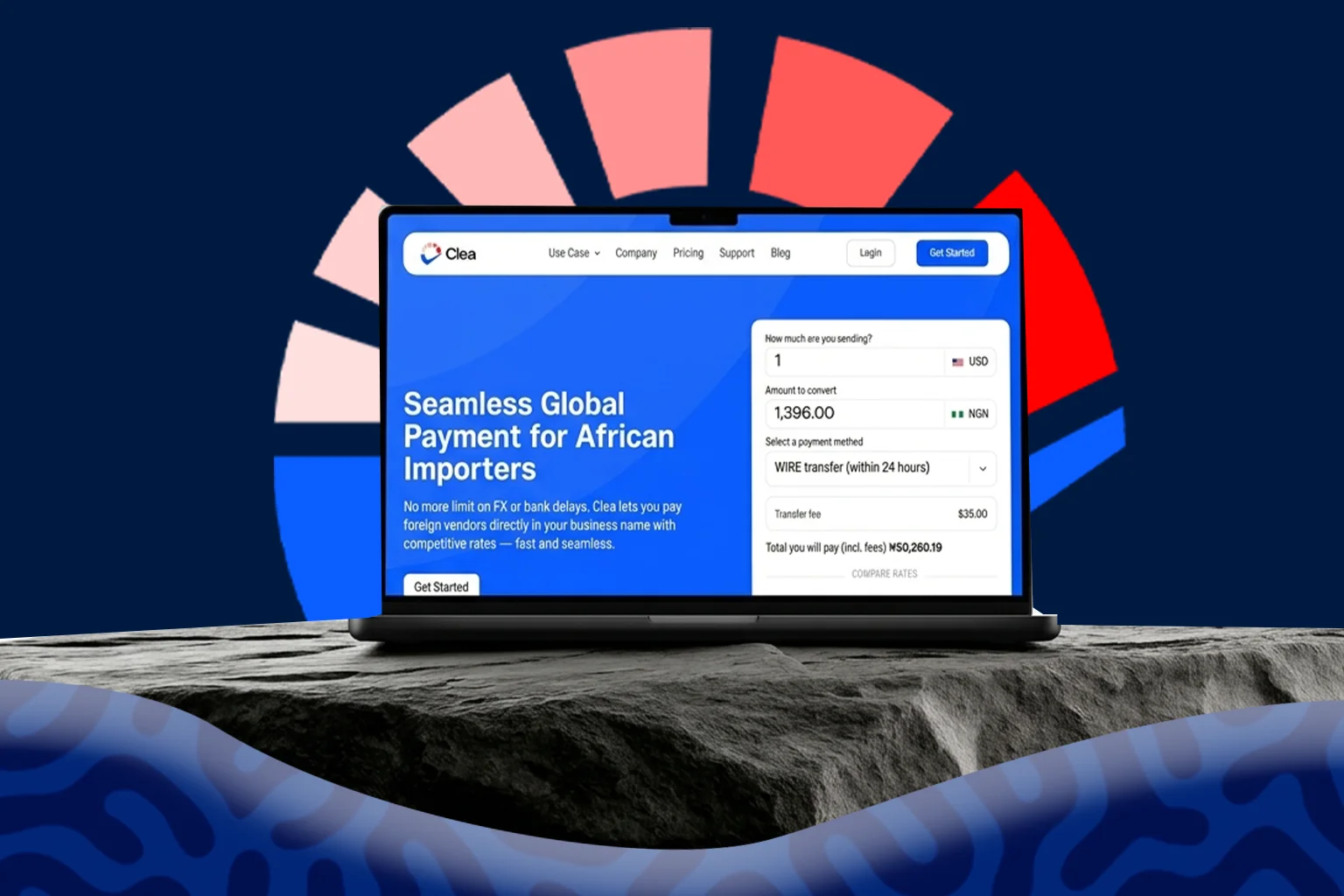
Clea provides this connectivity through a single platform that integrates Fedwire, Same-Day ACH, RTP, and FedNow, alongside built-in currency conversion. This allows businesses to fund in naira, convert to dollars, and route supplier payments based on urgency, cost, and settlement needs.
How Cross-Border Payments Are Executed With Clea
Cross-border payments for imports are not just about sending money. They sit in the middle of three moving parts: foreign exchange, banking access, and supplier expectations. Most of the friction importers’ experience comes from how these three layers interact.
Clea is built to simplify that entire chain in one place.
Instead of separating funding, FX conversion, and payment execution across different systems, businesses can fund in naira, convert to dollars within the same platform, and complete supplier payments directly from that balance. This removes the need to coordinate multiple banking steps before a payment can even be initiated.
Pricing is also made visible upfront. Exchange rates and fees are shown before confirmation, so the total cost of a transaction is known in advance. This reduces the uncertainty that often comes with traditional wire transfers, where additional deductions may only appear after settlement.
On the execution side, Clea connects to multiple U.S. payment rails, allowing payments to be routed based on what fits the transaction. Routine invoices can move through cost-efficient rails, while urgent payments can be settled instantly where needed. Wire transfers remain available for cases where they are required.
The platform is designed for trade flows rather than individual transfers. That means higher transaction values can be processed without being fragmented into multiple payments, and each transaction is linked to a verified beneficiary for clearer tracking and reconciliation.
Every payment is traceable from initiation to settlement, giving businesses a clearer view of where funds are at each stage of the process. For importers managing multiple suppliers, this visibility becomes as important as speed.
Is Clea Safe to Use for International Payments?
Trust is one of the biggest concerns when sending money abroad, especially when you’re paying suppliers you’ve worked hard to secure.
Clea operates within a regulated framework and moves payments through established US networks that carry millions of legitimate transactions every day, so your money travels on proper infrastructure rather than informal channels.
There are safeguards on each payment too. You confirm the beneficiary’s details before the transfer goes out, which lowers the chance of sending money to the wrong account, and every payment is recorded, leaving a clear trail you can keep for your business and import documentation.
Frequently Asked Questions
Why do foreign suppliers prefer payment by wire transfer?
Foreign suppliers prefer wire transfers because they are widely accepted, secure, and support large or bulk payments across borders. Once funds are received, the payment is considered final, which gives suppliers confidence to release goods or process orders.
How long does it take to pay a US supplier with Clea?
It depends on the rail you choose. A Fedwire payment on Clea settles in under two hours, and an ACH payment settles within 24 hours. A traditional bank wire, by contrast, usually takes three to five working days.
What is the cheapest way to pay a US supplier from Nigeria?
Same Day ACH is usually the lowest-cost rail, because it avoids the flat fee a wire charges on every transfer.
Do I still need a Form M if I use Clea?
Yes, Form M is required for every import into Nigeria, no matter how you pay. The payment method does not change that, so you still file it through the Single Window Trade Portal.
Are there limits on how much I can send internationally?
Banks often set low daily or per-transfer limits on international wires. This can force a large invoice to be split into several payments. Clea is designed for import-sized payments.