
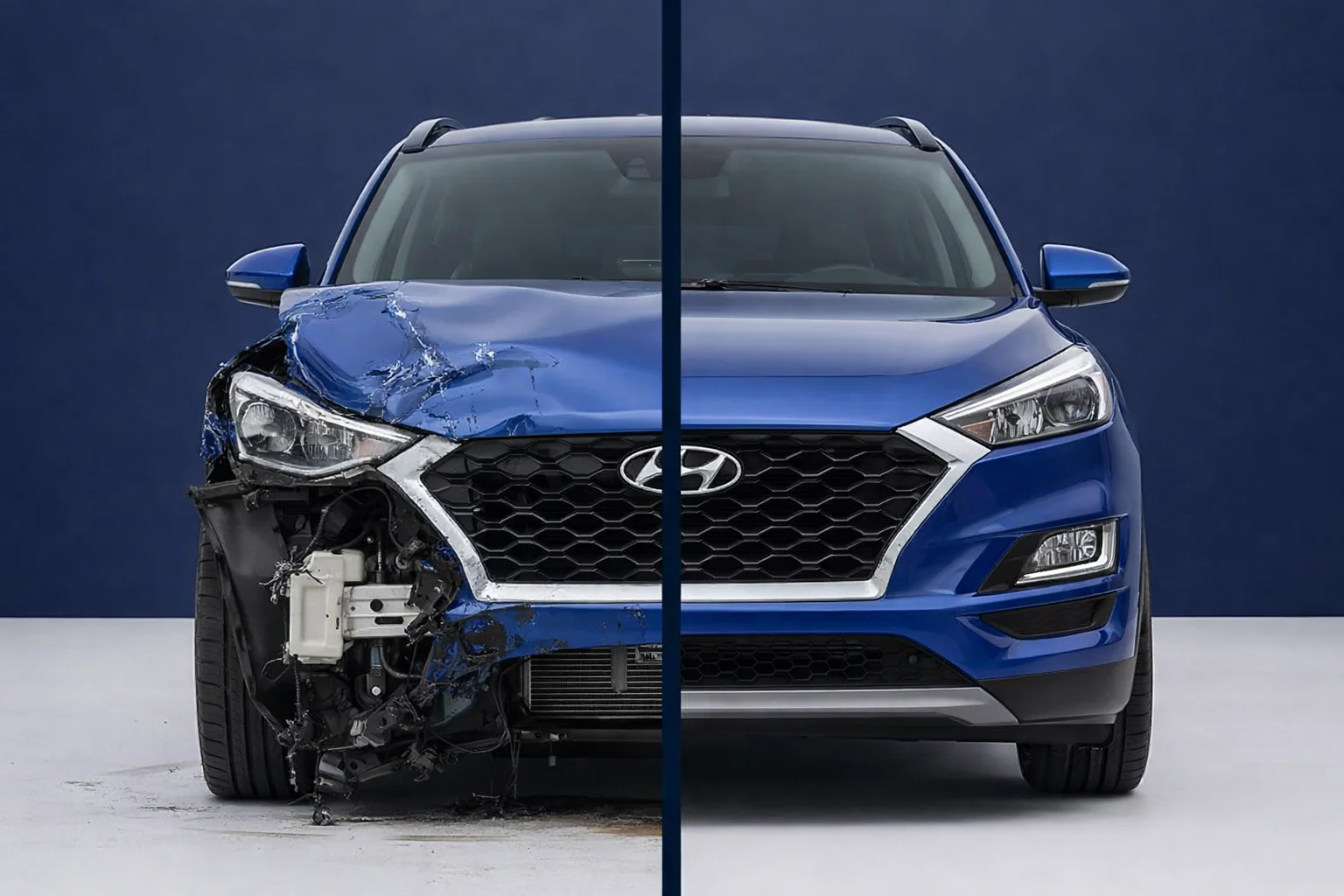
Thousands of used cars enter Nigeria from the United States, Canada, and Europe. Some arrive in near-perfect condition with clean titles. Others arrive with dents, deployed airbags, or missing bumpers, carrying salvage titles.
For buyers and importers, the choice between a clean title car and an accidented one comes with trade-offs. Most times, the right pick depends on your budget, your access to a reliable mechanic or panel beater, and how well you understand what you’re actually paying for.
Let’s walk you through what each title type means, how to inspect them, what the real costs look like, and what to watch out for along the way.
What a Clean Title Means
A clean title car is a vehicle that has not been declared a total loss by an insurance company. In simple terms, it means the car has not suffered damage severe enough for insurers to write it off. The car was never written off due to an accident, flood, fire, or theft.
That’s useful information, but it’s worth understanding what a clean title does not tell you.
A car with a clean title can still have been involved in minor accidents. If the owner paid for repairs out of pocket and never filed an insurance claim, the title stays clean. The car could have had its bumper replaced, its fender repainted, or even some suspension work done, and none of that would show up on the title.
Clean titles also don’t speak to the car’s mechanical condition. A vehicle with a clean title could still have engine issues, worn-out brakes, or transmission problems that developed over time from normal use.
They often require little or no repairs after arrival and can be resold more easily because buyers tend to trust vehicles without accident history.
So while a clean title is generally a positive indicator – and it does make the car easier to insure, finance, and resell – it’s not a certificate of perfection. It’s more like a starting point.
What an Accidented Car Actually Is
In the Nigerian car market, the term accidented is used broadly to describe vehicles that have been damaged before importation. In the US, where most of these cars originate, these vehicles typically carry what’s called a salvage title.
A salvage title is issued when an insurance company determines that the cost of repairing a vehicle exceeds a certain percentage of its market value, often around 50 – 75%, depending on the state. At that point, the insurer declares the car a total loss, pays out the claim, and the car may be up for resale.
Here’s an important nuance, total loss doesn’t always mean the car is destroyed. A newer car with extensive cosmetic damage (think dented panels, scratched paint, cracked headlights) could be declared a total loss simply because the repair bill is high relative to the car’s depreciated value. Mechanically, the car might run fine.
On the other end of the spectrum, some salvage cars have sustained serious structural damage such as bent frames, compromised crumple zones, and flood-damaged wiring. These are the vehicles that pose real safety and reliability concerns, even after repair.
The distinction between cosmetic and structural damage is the single most important thing to understand when considering an accidented car.
Importing Accidented Cars vs Clean Title Cars
Most accidented cars that end up in Nigeria are sourced from US-based salvage auctions, particularly platforms like Copart and IAA. These platforms sell vehicles that insurance companies have written off, and they’re open to international buyers either directly or through registered brokers.
The process typically requires an importer (or a broker acting on their behalf) to bid on a vehicle at auction, win it, arrange for inland transportation to a US port, and then ship it to Nigeria, usually to Lagos (Apapa or Tin Can Island) or, in some cases, through Cotonou.
Clean title vehicles, by contrast, are usually sourced from dealer lots, private sellers, or auctions, including Manheim Auctions or Adesa, where the cars are in drivable condition.
Most auction platforms provide vehicle photos, damage descriptions, and sometimes VIN history, but since you’re still buying a car you likely haven’t seen in person. That makes your ability to evaluate damage from photos and reports a critical skill.
Read Also: How to Pay for US Car Auctions From Nigeria
Why Accidented Cars Have Become So Popular in Nigeria
The cost of importing clean title or new cars has climbed sharply, and in Nigeria, where labour costs for auto repair are significantly lower than in the US or Europe, it often makes financial sense to buy a damaged vehicle, ship it over, and have it repaired locally, as accidented vehicles can cost 30 to 60 percent less to purchase at auction.
According to freight forwarders and clearing agents, a significant portion of the used vehicles entering Nigeria now carry some form of damage. Some industry estimates put the figure as high as 60 to 70 percent of all Tokunbo imports. The reasoning is straightforward – importers who can no longer afford clean title vehicles are turning to salvage cars to maintain margins or simply to keep their business running.
There’s also a consumer angle. For everyday buyers who want a relatively recent model, say, a 2025 Toyota Highlander or a 2024 Honda Accord, going the accidented route can be the difference between affording the car or not.
How to Inspect a Clean Title Car
A clean title doesn’t remove the need for due diligence. Here’s what to check:
- Run a VIN report: before anything else, get the vehicle’s VIN and check it through services like Carfax or AutoCheck. These reports reveal accident history, ownership changes, service records, and whether the title has ever been branded. A VIN check costs a few dollars and can save you from a very expensive mistake.
- Examine the body panels. Stand back and look at the car from different angles. Are the gaps between panels consistent on both sides? Do all doors, the boot, and the bonnet close flush? Uneven gaps or panels that sit slightly off are common signs of past bodywork.
- Check the paint. Factory paint has a uniform texture and colour. If one section looks slightly different under sunlight or feels rougher to the touch, that area may have been repainted. You can also use a small magnet; if it doesn’t stick in certain spots, there could be body filler underneath, which suggests previous damage.
- Inspect under the bonnet. Look for welding marks that don’t look factory-standard. Check for fluid leaks, damaged hoses, and general signs of wear. A bent radiator support (the structure behind the front bumper) often indicates a front-end collision.
- Test drive. Pay attention to how the car tracks. If it pulls to one side or if the steering is centred. Also, take note of unusual noises over bumps. These can indicate alignment, suspension, or structural issues.
- Get a professional inspection. This is the most important step. A qualified mechanic can identify problems that aren’t visible to the untrained eye, like frame misalignment, hidden leaks, electrical faults, and transmission issues.
How to Evaluate an Accidented Car
With salvage vehicles, the inspection approach shifts. You already know there’s damage, but the goal is to understand its severity and whether it’s been (or can be) properly addressed.
- Determine the type of damage: cosmetic damage could mean dented panels, cracked lights, scratched bumpers, which are generally manageable and affordable to fix. Structural damage to the frame or chassis is a different matter entirely. A bent frame compromises the car’s safety, handling, and long-term reliability. It’s also important to look out for flood damage.
- Check airbag status: deployed airbags are a strong indicator of a serious collision. Replacing airbags properly is expensive, and if it’s done incorrectly, they may not deploy when needed. When you start the car, the airbag warning light should come on briefly and then switch off. If it stays lit, there’s an unresolved issue.
- Look for flood damage: this one is particularly deceptive because the signs aren’t always obvious at first. Musty smells, water marks under the carpet or in the boot, foggy headlamps, or intermittent electrical problems can all point to water damage. Flooded cars corrode from the inside out and tend to develop unpredictable issues over time.
- Request pre-repair photos. If you’re buying from a dealer who imported and fixed the car locally, ask to see photos of the car as it arrived. Reputable dealers won’t hesitate to show you. If a seller refuses or claims they don’t have any, that’s worth noting.
- Assess repair quality. If the car has already been repaired, check whether the work was done properly. You can run your hand along the body to feel for inconsistencies.
4 Major Red Flags to Look Out For When Buying Cars
Title washing
This is an illegal practice where a salvage title is fraudulently cleaned to appear as a clean title. It happens more often than most people realise. If a car’s price seems unusually low for a supposed clean title, something may be off. Always verify with a VIN check.
Missing documentation
A seller who can’t produce the original title, bill of sale, or customs clearance documents is a seller you should avoid. Proper paperwork protects you both legally and financially.
Evasive or defensive behaviour
If a seller gets uncomfortable when you ask about the car’s history, won’t allow a mechanic to inspect it, or avoids showing you a vehicle history report, that’s a clear signal to move on.
Suspiciously fresh interiors on older cars
Brand-new seat covers, new carpet, and a heavy air freshener on a car that’s supposed to be five or six years old could be masking flood damage or serious interior wear.
The Safety Question
Research published in BMC Public Health has pointed to vehicle quality as a direct factor in the rising number of road crash deaths in the country, with the study noting that a large proportion of imported used vehicles were previously involved in accidents abroad.
When an accidented car is repaired properly, this isn’t necessarily a safety concern. The problem arises when repairs are done cheaply or carelessly, for instance, when frames are straightened but not fully restored, when airbags are bypassed instead of replaced, when flood-damaged wiring is dried out instead of rewired. These shortcuts don’t always show up during a test drive. They show up during an emergency, when the car needs to perform the way it was designed to.
This doesn’t mean every accidented car is a hazard. But it does mean that the quality of the repair matters as much as the quality of the car itself. If you’re going the salvage route, investing in a thorough inspection and working with a mechanic who understands structural repair isn’t optional, but the entire point.
The Resale Factor
If you plan to sell accidented or clean title cars, title history is very important.
Clean title cars hold their value better in the secondary market. Buyers are generally willing to pay more for a vehicle with a straightforward history, and a clean title makes the transaction smoother.
A well-repaired salvage car can still be resold, but you should expect a lower return. Some buyers will walk away the moment they learn the car had a salvage title, regardless of how well the repairs were done. If you’re buying to keep for years, this matters less. If you’re buying with resale in mind, factor it into your decision.
Policy Shifts in Nigeria That Could Affect Your Next Import
The rules around importing accidented vs clean title cars into Nigeria are not static, and recent developments suggest the landscape is shifting in ways that importers need to pay attention to.
In late 2025, the federal government signalled a more aggressive stance against the influx of imported used vehicles. The Director-General of the National Automotive Design and Development Council (NADDC) announced plans to introduce stricter quality regulations, stating that only vehicles tested, accredited, and certified to meet international standards would be allowed into the country. Vehicles that fail these tests would be barred from importation entirely. This is part of a broader push to promote local vehicle assembly and reduce Nigeria’s dependence on foreign used cars.
Around the same time, the government launched its End-of-Life Vehicle (ELV) Recycling Regulation, designed to formalise the removal and recycling of vehicles that are no longer considered roadworthy. The regulation aims to create a circular economy around old vehicles while improving road safety, a direct response to concerns about the quality of cars on Nigerian roads.
On the customs side, the Nigeria Customs Service introduced a 4% FOB (Free on Board) levy as part of the new Customs Service Act. Freight forwarders have reported that this change, combined with the existing duty structure, has pushed clearing costs up by as much as 40% in some cases. The digital VIN valuation system, which customs now relies on more heavily, has also made it harder to under-declare vehicle values, a tactic that importers previously used to reduce their duty bills.
There’s also the long-discussed National Automotive Industry Development Plan (NAIDP), which the government has indicated it plans to push through the National Assembly. If enacted, this policy could introduce even tighter restrictions on used vehicle imports as part of the effort to grow domestic manufacturing.
For anyone planning to import a car, whether a clean title or accidented, staying current with these policy changes isn’t just helpful. It’s essential to avoid unexpected costs, delays, or seizures at the port.
Frequently Asked Questions
Is it advisable to buy a used car that’s been in an accident?
It depends on the severity of the accident and what was done to fix it. A car that was involved in a minor rear-end collision and had its bumper and tail lights replaced is a very different proposition from one that suffered a head-on impact affecting the frame. If you can verify that the damage was minor and the repair was solid, it can be a smart financial decision. If you can’t verify those things, it’s not worth the risk.
What are the best cars to import as accidented from the US to Nigeria?
Toyota and Honda models tend to be the most popular choices for accidented imports because parts are widely available and affordable in Nigeria, and local mechanics are very familiar with these brands. Models like the Toyota Camry, Toyota Highlander, Honda Accord, and Lexus RX 350 are consistently in demand.
How do I know if a car dealer is selling a repaired accident car as clean title?
The most effective defence is a VIN check, which will show the car’s full title history. Beyond that, inspect the car carefully for signs of past repairs.
What is the difference between a salvage title and a rebuilt title?
A salvage title means an insurance company declared the car a total loss due to damage, and it hasn’t been repaired or re-certified yet. A rebuilt title (sometimes called a branded title) means the car once had a salvage title but has since been repaired and passed a state inspection, certifying it as roadworthy again.